Become a Certified Facilitator
Build a structured, repeatable culture offer.
​
-
Complete the Facilitator programme
-
Activate commercial licence
-
Access wholesale pricing

Buy the Cards
Purchase the Culture Science deck for your team or organisation.
​
-
Run structured culture conversations
-
Ideal for leadership and team sessions

Explore the Cards
Understand the thinking behind the framework.
​
-
Why the cards work
-
How the facilitation structure operates
-
The behavioural science underpinning the model
Turn vague expectations into mutually agreed clear standards
Most teams talk about culture in general terms:
​
-
“Be collaborative”
-
“Take ownership”
-
“Respect each other”
But when pressure hits, those words mean different things to different people.
​
That’s where problems start.
​
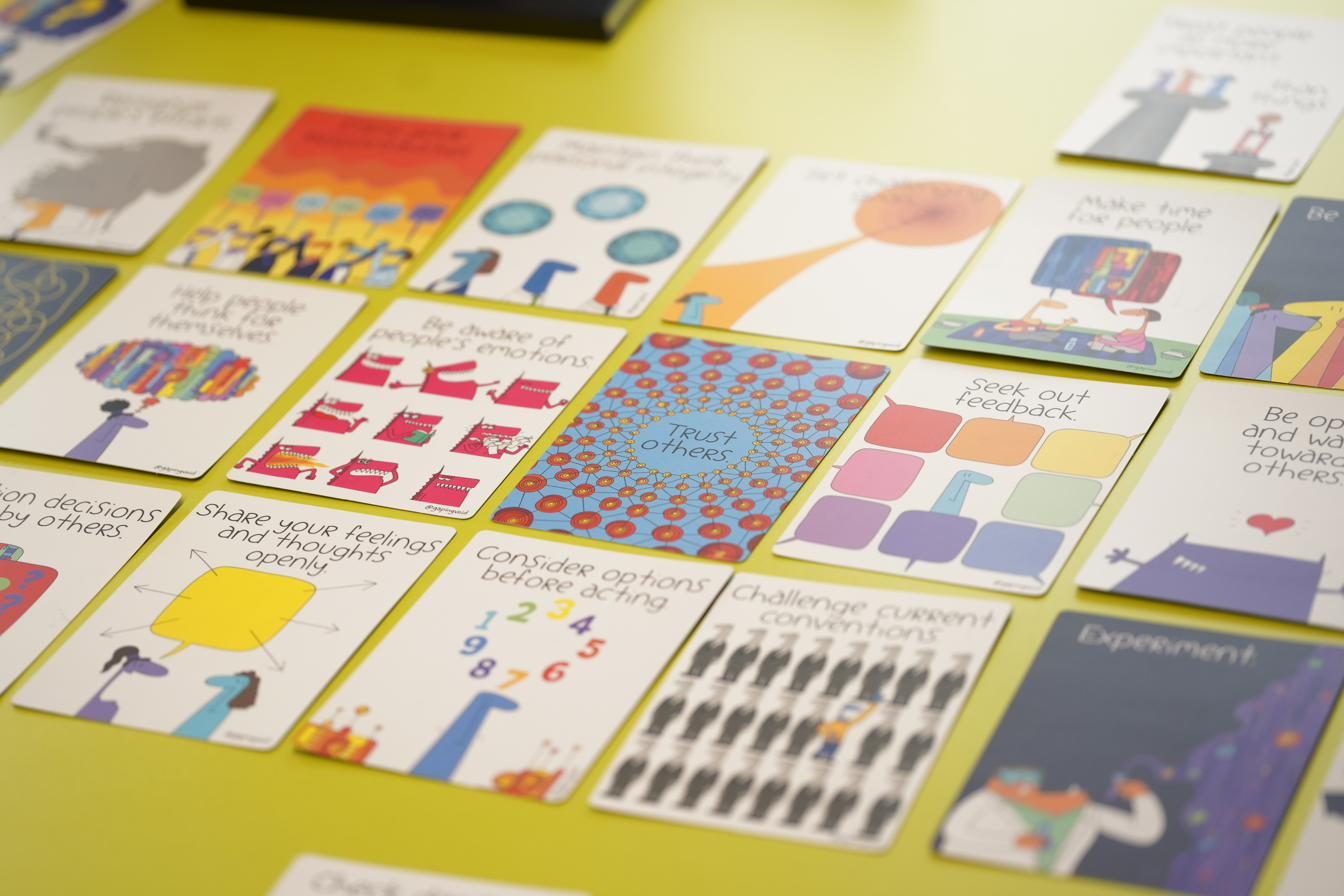
Culture Science Cards help teams get specific —
by defining the behaviours they want to see and the ones they don’t.
From assumption → to agreement
Flow:
​
1. Identify the situation that matters
A real moment: performance, safety, teamwork, customer experience
2. Surface behaviours
What does effective look like here?
What does ineffective look like?
3. Separate above and below the line
What we expect
What we won’t accept
4. Agree and apply
Use it in real decisions, meetings, and pressure moments
Close line:
​
This is where culture becomes clear — and usable.
Because people act on what they understand — not what’s written on the wall
You don’t get alignment from values statements.
You get it from shared understanding.
​
When teams define behaviours together:
​
-
ambiguity disappears
-
accountability increases
-
decisions become easier
That’s how culture actually shows up in performance.
What changes when expectations are clear
A leader tells the team to “take more ownership.”
Some step up.
Some wait for direction.
Some do their own thing.
Frustration builds.
​
Using the cards, the conversation changes:
​
Instead of being told — or left to interpret — the team defines it together.
​
Above the line (what we expect):
​
-
Speak up early when something’s at risk
-
Be clear on what you’re committing to
-
Ask for help before it becomes a problem
Below the line (what we won’t accept):
​
-
Waiting to be told what to do
-
Staying quiet and hoping it works out
-
Dropping the ball and explaining it later
What changes:
​
The team isn’t guessing anymore.
They’re not being managed into behaviour.
​
They’ve agreed how they work.
​
And that changes how they show up — every day.
​
That’s the difference between compliance and commitment.
Where this makes a difference
When a team is unclear on expectations
When standards are slipping
When behaviour varies across individuals
When leaders are saying one thing but seeing another
When “we should…” isn’t translating into action
​
If behaviour matters — clarity matters.
Three Pathways
For Leaders
​
Define clear behavioural standards with your team — and use them daily
👉 Get the Cards
​
​
​
For Facilitators & Consultants
​
Run sessions that move beyond discussion into agreement and action
👉 Become Certified
​
​
​
For Organisations
​
Create consistent expectations across teams and leaders
​
👉 Talk to Us
A practical tool — with real commercial upside
Certified facilitators use the cards to:
​
-
run sessions
-
support teams
-
build ongoing client relationships
-
access better pricing
With a simple model behind it.
​
If you work with teams — this creates value immediately.


This isn’t about values. It’s about behaviour.
Values describe intent.
Behaviour defines reality.
​
Culture Science Cards help teams decide:
​
-
what good looks like
-
what doesn’t
-
and what they’ll actually do about it
That’s the difference.
​
​
Culture is defined by behaviour
​
​
The question is — have you agreed what that behaviour is?